The Sexual Benefits of Guava Leaves Explored
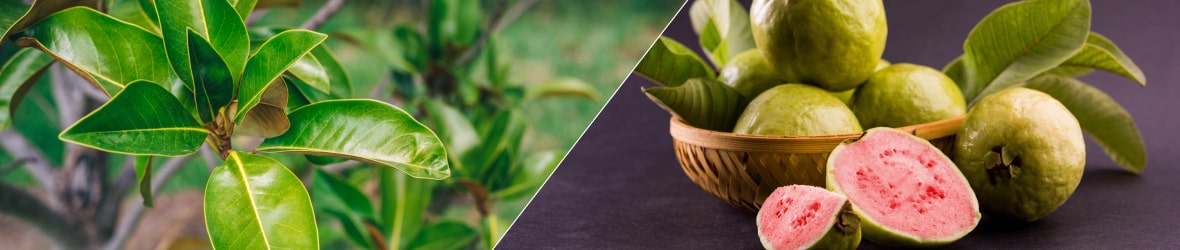


If you want to learn about the benefits of guava leaves sexually, you’ve come to the right place.
Studies show that guava leaves might be able to improve hormone balance, aid in reducing PMS symptoms, improve blood flow, and boost fertility.
In this article, we’ll explore all the possible sexual benefits of guava leaves.
We will also talk about other potential benefits of guava leaves, nutritional facts, and how to include them in your daily routine.
How Guava Leaves Can Support Sexual Health
1) Better Hormone Health
Guava leaves are high in vitamin A, a powerful antioxidant. Research shows that vitamin A is crucial for thyroid function and good sex hormone balance. So, guava leaves can benefit reproductive hormone levels.
2) Reducing PMS Symptoms
Dysmenorrhea is a common condition among women, which is when you get painful menstrual symptoms, such as stomach cramps.
Some evidence suggests that guava leaves may help reduce the intensity of menstrual cramps.
In fact, in a study performed on 197 women, those who took a guava leaf extract saw a reduction in menstrual cramps, even more so than when taking painkillers.
3) Improved Blood Flow and Blood Pressure
Another potential benefit of guava leaves is improved blood flow. Thanks to its high potassium content, guava leaves can help promote blood vessel relaxation, leading to a reduction in blood pressure.
High blood pressure may affect sexual function since it can decrease sex drive and increase the risk of erectile dysfunction.
For women, improved blood flow can result in increased libido and better orgasms since more oxygen can reach essential organs.
4) Improved Fertility
Finally, guava leaves may help improve sperm motility thanks to their high antioxidant content.
Studies show that antioxidants may help reduce oxidative stress, which can negatively affect sexual health.
While more research is still needed, antioxidants may help promote an ideal environment for conception.
Other Potential Benefits of Guava Leaves
Guava leaves have other benefits besides improved sexual health, including:
Lower Blood Sugar Levels
Evidence suggests that guava leaves may help improve blood sugar levels and reduce insulin resistance.
However, most studies regarding the connection between guava leaves and improved blood sugar levels are performed in animals.
So, more human studies are still needed to determine the possible benefits of guava leaves on blood sugar levels.
Improved Heart Health
As mentioned, guava leaves are high in potassium, which can help reduce blood pressure. In addition, guava leaves are high in fiber, meaning they can help reduce cholesterol levels.
Research shows that it can decrease cholesterol levels and increase “good” cholesterol.
Better Digestion
Since guava leaves are high in fiber, it can result in good digestion and decrease the risk of constipation.
According to some studies, guava leaf extract may also help decrease the intensity and duration of diarrhea symptoms.
Enhanced Immune Function
Guava leaves are high in antioxidants, which can help reduce inflammation. It also provides essential nutrients, such as vitamin C, that can help improve immune function. Therefore, they may help reduce the risk of catching a cold.
Nutritional Facts About Guava Leaves
There is not a lot of detailed information regarding the nutritional facts about guava leaves. However, the studies that are available state the following nutritional facts regarding 100 grams of guava leaves.
- Carbs: 12.7 grams
- Proteins: 18.5 grams
- Fats: 0.6 grams
In addition, it also seems that guava leaves are high in vitamin C, potassium, magnesium, manganese, and those from the B complex. They are also high in antioxidants, such as phenolic compounds.
Recipe Ideas To Consume Guava Leaves
While guava can be used in many different recipes, that is not the case with guava leaves. Due to its peculiar taste, guava leaves are often taken as an extract or in tea form.
So, how do you make guava leaf tea? Here is the step-by-step process:
- Measure the guava leaves and the water (you can do it in grams or cups).
- Combine the guava leaves with the water and bring to boil in a saucepan.
- Cook in a pot with a lid for around 15 minutes in low heat.
- Strain the guava leaves from the tea and set the leaves aside.
You can enjoy the guava leaf tea with some honey or lemon to boost its flavor.
Are There Any Side Effects of Psidium Guajava?
Guava leaves are generally safe and well-tolerated. However, for some people, guava leaf extract may cause some digestive problems, such as stomach cramps, nausea, and bloating.
If this is the case, reduce the dosage or talk to your doctor.
If you are taking any chronic medication, especially blood sugar-related, you may want to speak with your doctor before adding it since it may cause abnormally low blood sugar levels.
Conclusion
Guava leaves may have benefits sexually by improving fertility and blood flow, reducing PMS symptoms, and better hormone health.
In addition, guava leaves provide other health benefits, such as improved digestion and heart health, lowering blood sugar levels, and enhancing immune function.
There aren’t too many ways to include guava leaves in your daily routine. The best way is through a guava leaf extract of tea.
However, if you are taking chronic medication, make sure you speak with your doctor before adding guava to your diet.
This article is for informational purposes only and does not serve as medical advice. The details provided here are not a replacement for, and should never be depended upon as, professional medical advice. Always consult your physician regarding the potential risks and benefits of any treatment.
Our Medical Review Process
At Ben’s Natural Health, we are committed to maintaining the highest standards of accuracy, transparency, and scientific integrity. Every piece of content is carefully developed by medical professionals and undergoes a thorough review every 12 to 24 months. This ensures that our information remains current, reliable, and rooted in credible, evidence-based research. We reference only peer-reviewed studies from reputable medical journals, providing full citations and direct links to enhance trust and confidence. Learn more about our medical review process and research standards.
Our Editorial Guidelines
For over 25 years, Ben’s Natural Health has been a trusted source of scientifically backed, reliable health information. Our editorial guidelines uphold the highest quality and integrity for every article we publish. Each piece is written by qualified experts and undergoes independent quality checks. We prioritize transparency by clearly displaying contributor credentials and biographies at the beginning of every article. Read more about our editorial standards.
Medical Disclaimer
The content on this blog is for informational purposes only and should not be considered a substitute for professional medical advice, diagnosis, or treatment. While our articles are authored and reviewed by licensed medical professionals, they may not address your specific health concerns. Always consult a qualified healthcare provider before making any medical decisions.
Article Sources
- Brossaud J, Pallet V, Corcuff JB. Vitamin A, endocrine tissues and hormones: interplay and interactions. Endocr Connect. 2017 Aug 9;6(7):R121-R130. doi: 10.1530/EC-17-0101. PMID: 28720593; PMCID: PMC5551430.
- Doubova SV, Morales HR, Hernández SF, del Carmen Martínez-García M, de Cossío Ortiz MG, Soto MA, Arce ER, Lozoya X. Effect of a Psidii guajavae folium extract in the treatment of primary dysmenorrhea: a randomized clinical trial. J Ethnopharmacol. 2007 Mar 21;110(2):305-10. doi: 10.1016/j.jep.2006.09.033. Epub 2006 Oct 13. PMID: 17112693.
- Haddy FJ, Vanhoutte PM, Feletou M. Role of potassium in regulating blood flow and blood pressure. Am J Physiol Regul Integr Comp Physiol. 2006 Mar;290(3):R546-52. doi: 10.1152/ajpregu.00491.2005. PMID: 16467502.
- Smits RM, Mackenzie-Proctor R, Fleischer K, Showell MG. Antioxidants in fertility: impact on male and female reproductive outcomes. Fertil Steril. 2018 Sep;110(4):578-580. doi: 10.1016/j.fertnstert.2018.05.028. PMID: 30196940.
- Deguchi Y, Miyazaki K. Anti-hyperglycemic and anti-hyperlipidemic effects of guava leaf extract. Nutr Metab (Lond). 2010 Feb 2;7:9. doi: 10.1186/1743-7075-7-9. PMID: 20181067; PMCID: PMC2831039.
- Ojewole JA. Hypoglycemic and hypotensive effects of Psidium guajava Linn. (Myrtaceae) leaf aqueous extract. Methods Find Exp Clin Pharmacol. 2005 Dec;27(10):689-95. doi: 10.1358/mf.2005.27.10.948917. PMID: 16395418.
- Ojewole JA. Hypoglycemic and hypotensive effects of Psidium guajava Linn. (Myrtaceae) leaf aqueous extract. Methods Find Exp Clin Pharmacol. 2005 Dec;27(10):689-95. doi: 10.1358/mf.2005.27.10.948917. PMID: 16395418.
- Kumar M, Tomar M, Amarowicz R, Saurabh V, Nair MS, Maheshwari C, Sasi M, Prajapati U, Hasan M, Singh S, Changan S, Prajapat RK, Berwal MK, Satankar V. Guava (Psidium guajava L.) Leaves: Nutritional Composition, Phytochemical Profile, and Health-Promoting Bioactivities. Foods. 2021 Apr 1;10(4):752. doi: 10.3390/foods10040752. PMID: 33916183; PMCID: PMC8066327.
Article Update History
Created on February 6, 2024
Explore More
5 Benefits of Almonds Sexually: Sex Drive, Stamina, ED, Mood
Besides being a delicious crunchy snack, almonds offer countless health benefits. They are known to help reduce inflammation, promote good skin, and support gut ...