Urinary Hesitancy: Causes, Symptoms, Treatment




Article Summary
- Urinary hesitancy is a condition that refers to the difficulty that develops with a person’s ability to urinate.
- Among men, the most common reason why urinary hesitancy develops tends to be benign prostatic hyperplasia (BPH).
- Urinary hesitancy can be a sign of an underlying health condition, so it is important to speak with your doctor if you are experiencing symptoms.
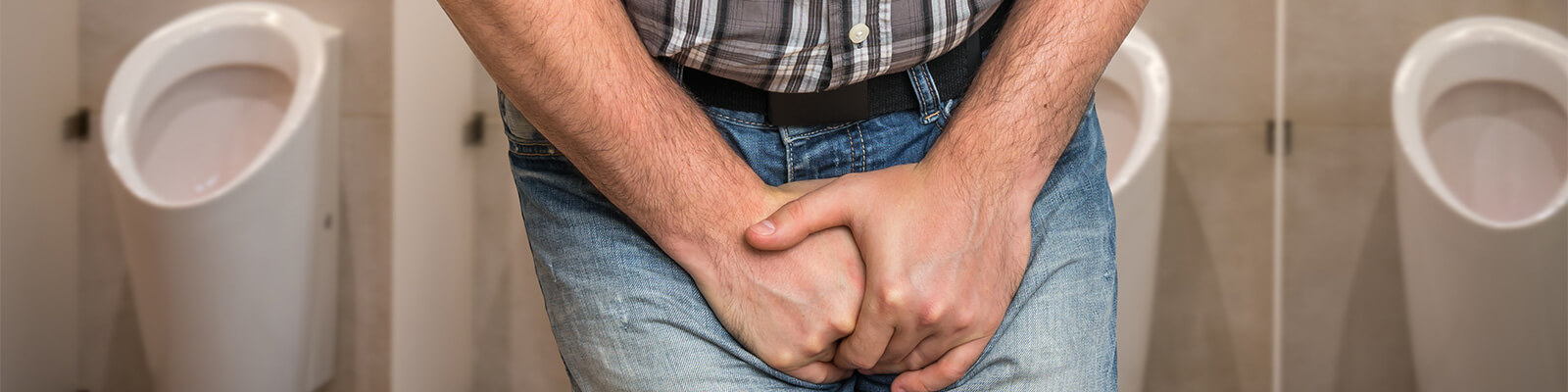
Standing at the toilet and waiting – sometimes 30 seconds, sometimes longer – while nothing happens is something far more men experience than ever admit. Urinary hesitancy affects millions of Americans, and in many cases it signals an underlying condition that’s worth understanding and, often, treating. This article covers what causes it, what you’ll notice first, and what your options look like.
What Is Urinary Hesitancy?
Urinary hesitancy is difficulty starting or maintaining a urine stream, even when the bladder feels full and the urge to void is present. It’s not the same as not needing to go, it’s the frustrating disconnect between wanting to urinate and being able to.
Normally, urination happens in two phases. During the storage phase, the bladder fills and the sphincter stays closed. When enough urine accumulates, the pontine micturition center, a region in the brainstem, coordinates the voiding reflex: the detrusor muscle contracts, the sphincter relaxes, and urine flows. In healthy adults, a maximum flow rate (Qmax) above 15 milliliters per second is considered normal, and post-void residual (PVR) volume should sit below 50 mL. When any part of this sequence breaks down, hesitancy follows. The Cleveland Clinic defines urinary hesitancy as a condition that can affect any age group, though it’s most common in older men and women.
Hesitancy exists on a spectrum. Mild cases mean a delayed start of a few seconds. Severe cases, or untreated progressive ones, can tip into urinary retention, where voiding becomes impossible altogether.
How It Differs From Other Urinary Problems
Hesitancy is a voiding-phase problem. Overactive bladder and urinary urgency are storage-phase problems, the bladder signals too early or too forcefully. Urinary incontinence involves loss of control. Hesitancy is the opposite: you have control, but you can’t get the flow started or sustained. Nocturia (frequent nighttime urination) can coexist with hesitancy when an obstruction forces the bladder to work in smaller, incomplete cycles.
Who Gets Urinary Hesitancy? Prevalence Across Men and Women
Hesitancy hits men far more often, and anatomy is the reason. The prostate gland wraps around the urethra; as it grows with age, it squeezes that outflow channel tighter. According to a 2024 NIDDK report, BPH/LUTS (lower urinary tract symptoms) affected 31% to 35% of men aged 65 and older enrolled in Medicare Advantage plans between 2015 and 2021. By age 80, roughly 80% of men show histological signs of an enlarged prostate. Those numbers explain why voiding dysfunction is a defining feature of male aging.
Women get hesitancy too, but the causes differ. Pelvic organ prolapse, pelvic floor dysfunction, prior pelvic surgery, and certain neurological conditions are the primary drivers. A NIDDK analysis of urinary incontinence data makes clear that women’s urinary symptoms are largely under-recognized and undercounted. Epidemiological modeling from DelveInsight projects that underactive bladder – a major driver of hesitancy – will affect a growing share of women as populations age. The European Association of Urology notes that female urinary symptoms carry a quality-of-life burden that often goes unaddressed for years.
Common Causes of Urinary Hesitancy
Hesitancy has four broad root categories: mechanical/obstructive, neurogenic, muscular, and psychogenic. Most cases involve more than one. A population-level review in PMC confirms that multiple overlapping contributors are the rule, not the exception, especially in men over 50. A 2010 International Consultation on Incontinence epidemiological review similarly found that voiding dysfunction co-occurs with storage symptoms in a large proportion of patients.
Understanding the causes of a weak urine stream often leads directly to the cause of hesitancy, as the two problems share most of the same pathways. Pelvic floor dysfunction is a muscular contributor that’s frequently overlooked in men, and urethral syndrome can cause hesitancy in both sexes through chronic urethral inflammation.
Prostate-Related Causes
Benign prostatic hyperplasia (BPH) is the single most common cause of hesitancy in men. A young adult’s prostate typically weighs around 20 grams. With BPH, it can balloon to 40 grams or beyond, physically narrowing the urethral lumen and raising outlet resistance. The bladder then has to work harder to push urine through, and it often can’t keep up that pressure long enough to empty completely. UCSF clinical research in this area continues examining how changes in prostate volume track with symptom progression over time.
Urethral stricture disease is another mechanical cause, typically from scarring after infection, instrumentation, or trauma. It narrows the urethral tube itself rather than the gland, but the voiding effect is similar: a thin, slow, or intermittent stream that sometimes stops entirely.
Nerve and Muscle Causes
Detrusor hypoactivity, a bladder muscle that contracts weakly or inconsistently, is a distinct muscular cause of hesitancy separate from outlet obstruction. The detrusor can become underactive from long-standing overdistension, aging, or neurological damage.
Neurogenic causes arise when the neural pathways linking the pontine micturition center to the bladder and sphincter get disrupted. Stroke, Parkinson’s disease, multiple sclerosis, diabetes-related autonomic neuropathy, and spinal cord injury can all interfere with that coordination. A 2025 review in Cureus found that suprasacral spinal cord lesions tend to produce detrusor overactivity paired with sphincter dyssynergia, the sphincter and bladder contract at the same time instead of alternating, creating a functional blockage. Sacral lesions, by contrast, produce an areflexic (underactive) bladder that can’t initiate voiding at all.
Infections and Inflammation
Acute urinary tract infections, prostatitis, and urethritis can all trigger temporary hesitancy by inflaming the tissues surrounding the urethral outlet. Swelling narrows the channel, and pain prompts an involuntary protective tightening of the pelvic floor. In men, acute bacterial prostatitis in particular can cause dramatic, sudden voiding difficulty. The good news: hesitancy tied to infection typically clears once treatment addresses the underlying cause.
Medications and Other Factors
Several drug classes impair the voiding reflex by interfering with the autonomic signals that coordinate bladder contraction and sphincter relaxation. A 2024 analysis in Urology identified anticholinergics, opioid analgesics, NSAIDs, benzodiazepines, tricyclic antidepressants, antipsychotics, antihistamines, and alpha-adrenergic agonists (including decongestants) as the most frequently implicated agents. Opioids suppress the detrusor directly; anticholinergics block the muscarinic receptors the bladder needs to contract; alpha-agonists raise outlet resistance at the bladder neck.
In many cases, symptoms ease within days to a few weeks after the causative drug is stopped or the dose is adjusted. But don’t stop a prescribed medication on your own. Always talk to your doctor before making any changes.
Recognizing the Symptoms
The most obvious sign is a long wait at the start of urination, often 30 seconds to a minute or more before flow begins. Beyond that, you might notice a weak or intermittent stream that starts and stops, a sensation that the bladder hasn’t fully emptied, straining or pushing to get flow going, and a slow dribble rather than a steady stream.
Men may sense an enlarged prostate through physical awareness alone, though the formal finding – a smooth, rubbery, enlarged gland – comes from a digital rectal exam performed by a doctor. Bladder distension, felt as uncomfortable fullness in the lower abdomen, points to retention. The symptoms of difficulty urinating overlap closely with those of lower urinary tract symptoms more broadly, and both call for proper evaluation.
Untreated hesitancy quietly chips away at quality of life. A 2025 analysis of functional urological surgery trends in England, published in PMC, found that deferred treatment produces measurable downstream harm: bladder wall thickening, recurrent infections, and worsening retention. Disrupted sleep from incomplete emptying forcing multiple nighttime trips, anxiety about public restrooms, and social withdrawal are real and common consequences, ones patients rarely volunteer unless a doctor asks directly.
When to See a Doctor
See your doctor if you’ve had a delayed urinary start, a weakened stream, or a sense of incomplete emptying for more than a couple of weeks. Don’t wait for things to get severe, urinary incontinence and overflow can develop from chronic incomplete emptying. A 2024 study comparing Rezum and UroLift outcomes in PMC found that patients with AUA symptom scores averaging 20 or higher were carrying significant quality-of-life burden before seeking procedural treatment; most had waited far too long.
Red Flags That Need Immediate Care
Go to an emergency department or call your doctor urgently if you experience:
- Complete inability to urinate (acute urinary retention), this is a medical emergency requiring catheterization
- Severe lower abdominal pain or visible bladder swelling
- Blood in the urine combined with difficulty voiding
- Fever, chills, or back/flank pain alongside urinary symptoms (possible kidney involvement)
- Sudden new hesitancy after a neurological event such as a stroke or spinal injury
Men are 13 times more likely to develop acute urinary retention than women, per StatPearls, which is why early assessment matters.
How Doctors Diagnose Urinary Hesitancy
Diagnosis starts with a detailed history and physical exam, prostate size on digital rectal exam, signs of bladder distension, and a review of medications. From there, the standard diagnostic tools are:
| Test | What It Measures | Normal Benchmark |
| Uroflowmetry | Maximum flow rate (Qmax) | ≥ 15 mL/sec |
| Post-void residual (ultrasound) | Urine left after voiding | < 50 mL (normal); > 150 mL warrants monitoring; > 300 mL = chronic retention |
| AUA Symptom Score | 7-question patient-reported severity index | 0 to 7 = mild; 8 to 19 = moderate; 20 to 35 = severe |
| Urodynamic testing | Detrusor pressure and coordination | Ordered when diagnosis is unclear |
The AUA Symptom Score is particularly practical, taking about two minutes to complete and giving both patient and clinician a reproducible baseline to track over time. Understanding post-void residual measurement is especially useful because an elevated PVR often reveals that a patient who feels they’re voiding adequately is, in fact, retaining a volume.
A 2025 epidemiological study of urinary tract conditions in older adults found that delayed diagnosis in men over 65 was associated with higher rates of hospitalization for acute retention. Urodynamic testing, measuring detrusor pressures during filling and voiding, is reserved for complex cases, particularly when neurogenic bladder is suspected or prior treatments have failed, as confirmed by a 2024 assessment of BPH patient-reported outcomes.
Medical Treatment Options
Treatment follows a logical progression – conservative first, then pharmacological, then procedural. Where to start depends on symptom severity (AUA score), prostate volume, PVR, and Qmax. A low-severity score with minimal PVR elevation often calls for watchful waiting paired with lifestyle changes. Men with moderate-to-severe scores, or elevated PVR, move to medication. Persistent obstruction despite medication – or a very high PVR, points toward a procedure. Overflow incontinence signals that retention has already progressed far enough to need urgent intervention. For practical strategies to make urination easier with BPH, lifestyle modifications can serve as a bridge while you and your doctor weigh next steps.
Medications Your Doctor May Recommend
Alpha-adrenergic antagonists (alpha-blockers such as tamsulosin, alfuzosin, silodosin) relax smooth muscle at the bladder neck and prostate, improving flow within days to weeks. They’re generally the first-line pharmacological choice for BPH-related hesitancy. Current guidelines suggest a trial of at least three to six months to assess response, with ongoing use as long as symptoms are controlled.
5-alpha reductase inhibitors (5-ARIs) such as finasteride and dutasteride reduce prostate volume by blocking the conversion of testosterone to dihydrotestosterone (DHT). They typically require 6 to 12 months before meaningful symptom improvement appears. Combination therapy, an alpha-blocker plus a 5-ARI, is supported by evidence for men with larger prostates (generally over 30 mL) and has been shown to reduce the risk of acute retention and the need for surgery more than either drug alone.
Procedures and Other Interventions
When medications aren’t enough, the options range from minimally invasive to surgical.
Intermittent self-catheterization (ISC) is a first option for men and women with retention who aren’t surgical candidates. The patient inserts a thin catheter to drain the bladder several times daily. It’s more comfortable than it sounds, and patients in comparative studies report better quality of life than those using indwelling catheters.
Transurethral resection of the prostate (TURP) has been the standard surgical benchmark for decades, removing obstructing prostate tissue through the urethra. Bipolar resectoscopes have largely replaced monopolar ones in modern practice because they allow saline irrigation, reducing the risk of the dilutional hyponatremia (“TURP syndrome”) that was once a serious complication of monopolar procedures.
Minimally invasive surgical therapies (MISTs) now account for nearly 25% of BPH procedures globally and have grown by 18% between 2022 and 2024, per Global Market Statistics data. Prostatic urethral lift (UroLift) uses permanent implants to pull the lobes apart mechanically; water vapor thermal therapy (Rezum) uses steam energy to destroy excess tissue. A 2024 PMC study comparing Rezum and UroLift showed both produced symptom reduction, with Rezum showing somewhat greater improvement on AUA scores. A 2026 expert consensus published in PMC emphasizes that MIST selection should be individualized by prostate anatomy, patient comorbidities, and preservation of sexual function.
Ohio State’s Wexner Medical Center is also studying BPH outcomes in men on antifibrotic therapy, an early signal that the treatment options continue to expand. Sacral neuromodulation is another option for hesitancy driven by neurogenic bladder dysfunction, using an implanted device to modulate the sacral nerve signals that coordinate voiding.
What You Can Do at Home
Conservative self-management can meaningfully reduce symptoms, particularly in mild-to-moderate cases.
Double voiding is one of the most practical techniques. After you finish urinating, stand or sit for 20 to 30 seconds, then try again. Leaning slightly forward, or for men sitting rather than standing, can also reduce outlet resistance and help the bladder empty more completely.
Timed voiding means scheduling bathroom trips every 2 to 3 hours rather than waiting for a strong urge. This prevents the bladder from becoming overfull and reduces the strain needed to initiate flow.
Fluid and dietary management matters too. Caffeine and alcohol both irritate the bladder and can worsen voiding difficulty, so reducing common bladder irritants is a simple first step. Staying well hydrated with water (rather than caffeinated or carbonated drinks) keeps urine dilute and less irritating to the urethra. For broader strategies, natural remedies for slow urine flow and natural tips to treat bladder problems cover practical lifestyle approaches worth incorporating alongside any medical plan.
Pelvic floor exercises can help when pelvic floor dysfunction, overtight rather than weak muscles, is contributing to hesitancy. In that case, relaxation-focused techniques, guided by a pelvic floor physiotherapist, are more appropriate than standard Kegel contractions.
When Hesitancy Is Caused by Anxiety or Habit
Paruresis, commonly called shy bladder syndrome, is a psychogenic form of urinary hesitancy in which anxiety about being observed, or about voiding in a public or unfamiliar setting, prevents urination despite physical urgency. It’s more common than most people realize and can range from mild situational difficulty to a near-total inability to void outside the home.
The mechanism is physiological. Anxiety activates the sympathetic nervous system, which increases tone in the urethral sphincter and suppresses the parasympathetic signals the detrusor needs to contract, and anxiety and urinary symptoms share this same sympathetic overdrive that disrupts normal autonomic coordination throughout the body. The bladder literally can’t start because the nervous system is in “fight or flight” mode. For a fuller explanation of paruresis and shy bladder syndrome, the mechanisms and management options are worth exploring in depth.
The evidence-based treatment here is graduated exposure therapy, a structured behavioral program, usually delivered within a cognitive-behavioral therapy (CBT) framework, where the person practices voiding in progressively more demanding settings under controlled conditions. With consistent practice, most people see meaningful improvement. A 2026 expert review in PMC notes that psychological and physiological factors frequently interact: anxiety-related hesitancy in a man who also has BPH can be substantially worse than either cause would produce alone. A therapist experienced in anxiety or health-related phobias is the right referral.
What happens if hesitancy goes untreated: Chronic incomplete bladder emptying increases the risk of urinary tract infections, bladder stones, and progressive detrusor damage from repeated overdistension. Over time, high post-void residual volumes can cause back-pressure that damages the kidneys. Treating hesitancy early protects the whole urinary system.
Frequently Asked Questions
Can urinary hesitancy go away on its own?
It depends entirely on the cause. Hesitancy from a temporary infection or a recently started medication often resolves once the trigger is gone. Hesitancy from an enlarged prostate or neurological condition generally doesn’t resolve without targeted treatment, and often worsens over time without it.
Is urinary hesitancy always related to the prostate?
No. While BPH is the most common cause in men over 50, hesitancy also occurs from neurological conditions, medication side effects, urethral stricture, pelvic floor dysfunction, and anxiety-related causes, in both men and women.
Can diabetes cause urinary hesitancy?
Yes. Diabetic autonomic neuropathy can damage the nerves that control the bladder, leading to a weak or areflexic detrusor. Men with diabetes and frequent urination sometimes also experience hesitancy as part of a broader pattern of bladder dysfunction. Blood sugar control matters for urinary health.
Does hesitancy always mean BPH?
Not necessarily, even in older men. A urologist can distinguish BPH from other causes using uroflowmetry, post-void residual measurement, and the AUA Symptom Score, so don’t assume the diagnosis without a proper evaluation.
Can hesitancy cause nocturia?
Yes, and fairly commonly. When the bladder never fully empties, it reaches capacity again faster, triggering nocturia (multiple waking trips to the bathroom overnight). Treating the hesitancy often reduces nighttime frequency as well.
Does frequent urination mean hesitancy, or are they different things?
They’re different problems that often show up together. Frequent urination in men is a storage-phase problem; hesitancy is a voiding-phase problem. BPH, for instance, causes both at once, it forces the bladder to work harder and still leaves it emptying less completely.
Conclusion
Urinary hesitancy – difficulty starting or sustaining the urine stream – has well-understood causes and effective treatments at every level of severity. BPH is the most common driver in men over 50, but neurological conditions, medications, pelvic floor problems, and psychological factors all play a role. Catching hesitancy early, before PVR climbs or the bladder loses compliance, keeps the widest range of options open, from behavioral changes and medication through to minimally invasive procedures. If you’re noticing a delay at the start of urination or a weak, stop-start stream, talk to your doctor; this isn’t something to quietly accept as a normal part of getting older.
This article is for informational purposes only and does not serve as medical advice. The details provided here are not a replacement for, and should never be depended upon as, professional medical advice. Always consult your physician regarding the potential risks and benefits of any treatment.
Dr. Howard Tay
MD, FACS, Board-Certified Urologist
Dr. Howard Tay, MD, FACS, is a board-certified urologist in Arizona with 25+ years of experience, recognized as a “Top Doc” by Phoenix Magazine.
Our Medical Review Process
At Ben’s Natural Health, we are committed to maintaining the highest standards of accuracy, transparency, and scientific integrity. Every piece of content is carefully developed by medical professionals and undergoes a thorough review every 12 to 24 months. This ensures that our information remains current, reliable, and rooted in credible, evidence-based research. We reference only peer-reviewed studies from reputable medical journals, providing full citations and direct links to enhance trust and confidence. Learn more about our medical review process and research standards.
Our Editorial Guidelines
For over 25 years, Ben’s Natural Health has been a trusted source of scientifically backed, reliable health information. Our editorial guidelines uphold the highest quality and integrity for every article we publish. Each piece is written by qualified experts and undergoes independent quality checks. We prioritize transparency by clearly displaying contributor credentials and biographies at the beginning of every article. Read more about our editorial standards.
Medical Disclaimer
The content on this blog is for informational purposes only and should not be considered a substitute for professional medical advice, diagnosis, or treatment. While our articles are authored and reviewed by licensed medical professionals, they may not address your specific health concerns. Always consult a qualified healthcare provider before making any medical decisions.
Article Sources
- What Is Urinary Hesitancy?. Cleveland Clinic. https://my.clevelandclinic.org/health/diseases/urinary-hesitancy
- https://www.niddk.nih.gov/-/media/Files/Strategic-Plans/urologic/2024/UDA-ADR-BPHLUTS-2024_508.pdf
- https://www.niddk.nih.gov/-/media/Files/Strategic-Plans/urologic/2024/UDA-ADR-UI-2024_508.pdf
- Underactive Bladder Epidemiology Insights and Forecast 2034. delveinsight.com. https://www.delveinsight.com/report-store/underactive-bladder-epidemiology-forecast
- Mapping the burden of female urinary incontinence: Prevalence, risk factors, and economic impact. uroweb.org. https://uroweb.org/news/mapping-the-burden-of-female-urinary-incontinence-prevalence-risk-factors-and-economic-impact
- Yao W, Wei X, Jing Q, Yuan X, Liu F, & Zhang X (2025). Epidemiological trends of urolithiasis in working-age populations: Findings from the global burden of disease study 1990-2021. PloS one, 20(7), e0327343. https://doi.org/10.1371/journal.pone.0327343
- https://www.sciencedirect.com/science/article/abs/pii/S0090429510000191
- UCSF Benign Prostatic Hyperplasia Clinical Trials. clinicaltrials.ucsf.edu. https://clinicaltrials.ucsf.edu/benign-prostatic-hyperplasia
- Spazzapan M, Evans R, Mehta S, Malde S, & Sahai A (2026). Analysis of functional urological surgery trends 2013-2024 in England using the HES database. World journal of urology, 44(1), 96. https://doi.org/10.1007/s00345-026-06184-9
- Wong K, Kop MM, & Lee F (2024). Comparing Patient-Reported Outcomes Following the Minimally Invasive Treatment of Benign Prostatic Hyperplasia (BPH)-Related Lower Urinary Tract Symptoms: Rezum Versus UroLift. Cureus, 16(11), e74532. https://doi.org/10.7759/cureus.74532
- Stephen W. Leslie, & Preeti Rout (2024). Male Urinary Retention: Acute and Chronic. https://www.ncbi.nlm.nih.gov/books/NBK538499/
- https://www.sciencedirect.com/science/article/abs/pii/S1047279725000365
- Malik Adil Mehmood, Shah Jehan, Issa Khan, Muhammad Ilyas, Usama Khan, & Wajid Ali (2024). The Assessment of Patient-Reported Outcomes in the Medical Management of Patients With Benign Prostatic Hyperplasia. Cureus, 16(8), e67027. https://doi.org/10.7759/cureus.67027
- Muhammad Raheel, Jaskarn Rai, Bilal Ahmad, Malek Gashaan, Roocha Odedra, & Antoni J Bochinski (2025). Postoperative Outcomes Following Rezum: A Novel Minimally Invasive Therapy for Benign Prostatic Hyperplasia (BPH). Cureus, 17(8), e90179. https://doi.org/10.7759/cureus.90179
- Vincent Hou, Sasha J Vereecken, Karen M Doersch, Kevin C Zorn, Garrett D Pohlman, & Granville L Lloyd (2026). Modern approaches to BPH management: expert insights and the latest evidence from the 2024 International Functional and Reconstructive Urology Update. Therapeutic Advances in Urology, 18, 17562872251414925. https://doi.org/10.1177/17562872251414925
- First-of-its-kind study will evaluate BPH outcomes among men on antifibrotic therapy. wexnermedical.osu.edu. https://wexnermedical.osu.edu/departments/innovations/urology/bph-outcomes-among-men-on-antifibrotic-therapy
Article Update History
Reviewer:
Created on September 3, 2019
Explore More
Squamous Epithelial Cells in Urine: UTI, Liver, Other Causes
Epithelial cells line the outside and inside of body surfaces, such as the blood vessels, skin, and organs, including the urinary tract. A normal ...