Doctor Answers: What Should I Know About Prostatic Urethra?





Article Summary
- The urethra forms part of the lower urinary system. It is the tube that carries urine from the bladder out of the body.
- It plays an important role in men’s health, especially prostate health and reproduction.
- There are many different causes of urethra pain. Most often, it occurs as a result of an infection or an irritation.
- If you start to experience pain, it is important to see your doctor.
This system allows a man to urinate, a process critical for expelling metabolic waste products and excess fluids from the body.
It also plays a crucial role in male reproductive health, as it transports semen (which contains sperm), a vital component of fertility.
While the urethra usually functions effectively, issues can develop at times.
This post explores the male urethra, including some common symptoms that you may experience, such as painful urination.
In preparing this article, a licensed medical doctor, Dr. Hamza Azam, was interviewed to provide expert clinical perspectives on the prostatic urethra. Direct questions were posed to Dr. Azam to ensure that his insights on male urethral anatomy and the specific role and function of the prostatic urethra reflect authoritative, firsthand knowledge. His responses contribute significant depth to the discussion, clarifying essential aspects of urethral health and its impact on overall urinary system functionality.
The information presented here not only covers the medically recognized anatomy of the prostatic, membranous, and spongy segments of the urethra, but also addresses frequently asked questions such as “what is a urethra?” and the importance of a healthy urethra in males. This comprehensive understanding of the male urethra’s anatomy is crucial for maintaining urological health. It is professionally reviewed and anchored in evidence-based, peer-reviewed medical sources to ensure accuracy and reliability for readers seeking detailed insights into the anatomy of the penis and the role of the urethral opening in urological health.
Q: What is the prostatic urethra, and how does it relate to the anatomy of the male urethra?
Dr. Hamza Azam answers: The prostatic urethra is a critical segment of the male urethra, which itself is a muscular tube connecting the bladder to the external opening at the tip of the penis. The male urethra has multiple roles; its primary function is to transport urine from the bladder to the penis and out of the body, but it also serves as a conduit for semen during ejaculation, highlighting its importance in both urinary and sexual health.
In medical literature describing sexual health and male urethral anatomy, the urethra is typically divided into three segments: the prostatic urethra, the membranous urethra, and the spongy (penile) urethra. Sometimes, you may see a four-part classification; this classification typically separates the very short ‘pre-prostatic’ or ‘intramural’ segment, located within the bladder wall itself, from the prostatic urethra proper.For visual learners, you can refer to an illustrative diagram of the prostatic urethra that shows its relationship to other key anatomical structures.
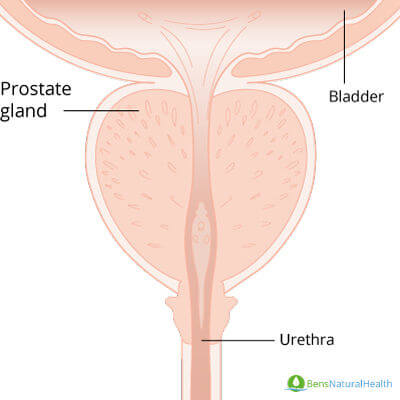
Q: Where is the prostatic urethra located within the male anatomy?
Dr. Hamza Azam answers: The prostatic urethra is located in the pelvis or groin region. Anatomy texts define it as the first segment of the male urethra after the bladder. Specifically, it begins at the bladder neck, passes through the prostate gland, and continues toward the membranous urethra. This strategic location allows the prostatic urethra to serve both the function of urination and ejaculation.
Q: What are the main segments of the male urethra, and how does the prostatic urethra compare to the membranous and spongy urethra?
Dr. Hamza Azam answers: The prostatic urethra is only the first of three main segments that make up the male urethra. Understanding each segment provides context for how the prostatic urethra vs the membranous urethra or the spongy urethra anatomy differs in structure and function:
1. Prostatic Urethra: As the primary passage through the prostate gland, this segment begins as a continuation of the bladder neck, traveling through the entire length of the prostate. Some anatomical sources further subdivide this region into the pre-prostatic (or intramural) urethra and prostatic urethra for greater specificity.
2. Membranous Urethra: This is the second, or middle, segment and is relatively short. It passes through the external urethral sphincter and the perineal membrane. These muscular structures (historically referred to as the urogenital diaphragm) provide voluntary control over urinary flow. The urogenital diaphragm offers structural support to this segment, and this area is sometimes associated with a higher risk of narrowing or injury due to its rigidity and location.
3. Spongy Urethra (Penile Urethra): This final and longest part is often called the penile urethra and runs through the penis itself. It is embedded within the corpus spongiosum (a spongy tissue chamber), and measures about 15 cm in length, with a typical diameter of about 6 mm. This segment extends to the external urethral orifice, the ‘pee hole’ at the tip of the penis. Its role is crucial not only in urination but also in the expulsion of semen. At the glans penis, the spongy urethra widens to form the fossa navicularis urethrae, the terminal portion of the urinary tract.
Q: What is the function of the prostatic urethra, and how does it contribute to male urinary and reproductive health?
Dr. Hamza Azam answers: The function of the prostatic urethra is central to both the urinary and reproductive systems in men. First and foremost, it houses the urethra through which urine leaves the bladder.
When urination occurs, the muscles of the bladder and the sphincter at the bladder neck relax, allowing urine to flow into and through the prostatic urethra, down the rest of the male urethra, and out of the body through the external urethral orifice.
In addition to its urinary function, the prostatic urethra plays a vital role in reproduction. During ejaculation, it serves a crucial reproductive function. The ejaculatory ducts (which carry sperm and fluid from the seminal vesicles) and the ducts from the prostate gland itself both empty into the prostatic urethra. This is where these components mix to form semen, which is then expelled..
The sphincter muscles play distinct, key roles. The internal urethral sphincter (at the bladder neck) contracts during ejaculation to prevent semen from flowing backward into the bladder (retrograde ejaculation). The external urethral sphincter (in the membranous urethra) provides voluntary control to stop urination. Muscles like the bulbospongiosus aid in ejaculation, demonstrating the coordinated interaction between the urinary and reproductive systems.
Thus, the prostatic urethra not only serves the basic urethral function of healthy urine expulsion, but also ensures the proper expulsion of semen, which is essential to natural penile anatomy and male fertility, thereby contributing to men’s overall health.
Q: Why is the prostatic urethra important for men’s overall health?
Dr. Hamza Azam answers: A healthy prostatic urethra is essential because it helps remove waste products from the body by facilitating urination and also makes reproduction possible by allowing semen to be ejaculated. The kidneys filter out toxins and excess fluids, which are then stored in the bladder before being excreted via the urethra. Any disruption in this process can result in the accumulation of harmful substances and risk to urinary health.
Additionally, the prostatic urethra helps prevent backward flow (reflux) of urine and seminal fluid, which could otherwise lead to irritation, infections, or reproductive issues. The urethra also acts as a barrier against foreign bodies and microbial invaders; when these penetrate the ‘pee hole’, they may cause frequent urination and potentially serious infections. Specifically, the secretions from the prostate gland that empty into the prostatic urethra contain antimicrobial compounds (such as zinc) that help protect the male urinary and reproductive tracts from infection.
Q: What are the possible causes of pain or burning in the prostatic urethra or male urethra?
Dr. Hamza Azam answers: When a patient experiences pain, burning, or discomfort involving the prostatic urethra (or any segment of the male urethra), it can be due to a wide range of underlying conditions. Common symptoms may include pain during urination, increased frequency, or other lower urinary tract symptoms.
Pain in this region may stem from infections (such as urinary tract infection or sexually transmitted diseases like chlamydia), urinary retention, urethritis (inflammation), urethral stricture (scarring or narrowing, often from surgery), or local irritation (such as urethral syndrome from harsh soaps or exposure to spermicides). Catheter use and anatomic conditions, such as a narrow urethra or urethral meatus abnormalities, can also be culprits.
Anyone with pain in the prostatic urethra or elsewhere along the urinary tract should seek prompt evaluation to avoid complications arising from delayed treatment.
Q: Which prostate problems and diseases can affect the prostatic urethra?
Dr. Hamza Azam answers: Several diseases affecting the prostatic urethra warrant attention. Prostatitis, or inflammation of the prostate gland, is a common condition that can cause swelling and result in pressure on the prostatic urethra, leading to impairments in both urination and ejaculation.
Another frequent condition is benign prostatic hyperplasia (BPH), which refers to non-cancerous enlargement of the prostate. This leads to narrowing of the prostatic urethra, with symptoms such as poor urine flow or even urinary retention. More rarely, conditions like urethral cancer or bladder cancer may also directly impact this vital segment of the male urethra.
Q: How is inflammation of the prostatic urethra diagnosed and treated?
Dr. Hamza Azam answers: Diagnosis and treatment depend on identifying the underlying cause. Doctors begin with a clinical history and physical examination, ordering targeted tests for sexually transmitted infections (STIs) or urinary tract infections as needed. Additional evaluations may include blood work, post-void residual urine tests (to check for retention), and imaging studies, such as voiding cystourethrography to visualize urethral structure and function, especially helpful if there is suspicion of involvement of the membranous and spongy urethra or an anatomical abnormality.
Treatment is always directed at the specific cause. For infection or inflammation, antibiotics and anti-inflammatory medications are commonly used. If structural or functional abnormalities (like a narrow urethra) are found, urologic procedures or surgery may be indicated. Treatments may also differ if cancer is suspected, with urethral cancer treatment requiring oncology consultation. In cases of prostate enlargement, Kegel exercises (pelvic floor exercises) can help maintain muscle control for both continence and sexual health, and some men experience benefits using natural remedies for BPH.
For advanced prostate or urethral conditions, surgical intervention or radiation therapy may be needed. Surgical approaches for an enlarged prostate are discussed in detail on this page.
Prompt consultation with your healthcare provider is crucial for appropriate diagnosis and individualized management. Maintaining awareness of the anatomy, function, and related conditions of the prostatic urethra is key to preserving long-term male health and urinary tract function.
FAQs About the Prostatic Urethra
Q: What is the prostatic urethra length, and why does it matter for men’s urinary health?
Dr. Hamza Azam answers: The prostatic urethra is the first segment of the male urethra, measuring approximately 3 to 4 centimeters in length. It passes through the prostate gland, connecting the bladder neck to the membranous urethra. This segment is crucial for both urinary and reproductive functions. During urination, it allows urine to flow from the bladder through the prostate and out of the body. During ejaculation, it serves as the conduit for semen. In this process, sperm and seminal fluid arriving from the ejaculatory ducts mix with prostatic fluid..
The length and position of the prostatic urethra make it susceptible to obstruction or compression, particularly in conditions like benign prostatic hyperplasia (BPH), where the prostate enlarges and presses against the urethra.
Such compression can lead to symptoms like a weak urine stream, frequent urination, and difficulty starting or stopping urination. Understanding the length and function of the prostatic urethra is essential for diagnosing and treating various urological conditions.
Q: Can you explain the prostatic urethra histology and how it affects its function?
Dr. Hamza Azam answers: The prostatic urethra is lined by transitional epithelium, also known as urothelium, which is specialized to withstand the varying pressures and chemical compositions of urine and semen. Beneath this epithelial layer lies a connective tissue layer that provides structural support and elasticity. The wall of the prostatic urethra contains smooth muscle fibers that facilitate the propulsion of urine and semen.
Additionally, the prostate gland surrounding this segment secretes prostatic fluid into the urethra, contributing to the formation of semen. The histological structure of the prostatic urethra enables it to perform its dual function effectively. Any alterations in its histology, such as inflammation, infection, or scarring, can impair its function, leading to symptoms like dysuria, hematuria, or ejaculatory dysfunction.
Understanding the histology of the prostatic urethra is crucial for diagnosing and managing conditions that affect its function.
Q: What are the leading causes of prostatic urethral enlargement, and what symptoms should I watch for?
Dr. Hamza Azam answers: The most common cause of prostatic urethral enlargement is benign prostatic hyperplasia (BPH), a non-cancerous enlargement of the prostate gland that occurs as men age. BPH leads to the compression of the prostatic urethra, resulting in obstructive urinary symptoms. Other causes include prostatitis, which is inflammation of the prostate, and prostate cancer, though less common.
Symptoms to watch for include a weak or interrupted urine stream, frequent urination, especially at night (nocturia), urgency, and a sensation of incomplete bladder emptying. In severe cases, urinary retention can occur, requiring immediate medical attention. If any of these symptoms are present, it is essential to consult a healthcare provider for evaluation and appropriate management.
Q: How does the male prostatic urethra structure influence common urinary or reproductive issues?
Dr. Hamza Azam answers: The structure of the male prostatic urethra plays a pivotal role in both urinary and reproductive functions. It serves as a conduit for urine from the bladder and for semen during ejaculation. The prostatic urethra is surrounded by the prostate gland, which secretes prostatic fluid that contributes to semen composition.
Any structural abnormalities or conditions affecting the prostatic urethra can lead to significant urinary and reproductive issues. For instance, benign prostatic hyperplasia (BPH) can cause the prostate to enlarge, compressing the urethra and leading to obstructive urinary symptoms. Additionally, conditions like prostatitis can cause inflammation, resulting in pain and potential ejaculatory dysfunction.
Understanding the structure and function of the prostatic urethra is essential for diagnosing and treating these common issues.
Q: Where is the male urethra located, and how does it relate to the function of the prostatic urethra?
Dr. Hamza Azam answers: The male urethra is a fibromuscular tube that extends from the internal urethral orifice at the bladder neck to the external urethral meatus at the tip of the glans penis. It is approximately 18 to 20 centimeters in length and is divided into three segments: the prostatic, membranous, and spongy (penile) urethra. The prostatic urethra is the first segment and passes through the prostate gland. It serves as a passage for both urine and semen.
The location of the prostatic urethra within the prostate makes it susceptible to conditions like benign prostatic hyperplasia (BPH), which can cause enlargement of the prostate and compression of the urethra, leading to urinary symptoms. Understanding the location and function of the prostatic urethra is crucial for diagnosing and managing urological conditions.
Conclusion
Understanding the prostatic urethra can help men feel more confident about their urinary and reproductive health. This part of the male urethra is like a small passage inside the prostate gland that guides urine from the bladder and, in some cases, plays a role in semen release. The prostatic urethra’s structure, length, and location are all important because they help your body manage these everyday processes comfortably and smoothly. Sometimes, changes in this area, such as enlargement or narrowing, can cause symptoms like weak urine flow or difficulty urinating. If you ever notice changes or discomfort, tell your healthcare provider. They are ready to answer your questions, review anatomy diagrams with you, and recommend solutions that support your well-being. Remember, learning more about your body, including parts like the prostatic urethra, is a positive step. You’re not alone; there are many resources and caring professionals to guide you toward better urinary and reproductive health.
This article is for informational purposes only and does not serve as medical advice. The details provided here are not a replacement for, and should never be depended upon as, professional medical advice. Always consult your physician regarding the potential risks and benefits of any treatment.
Dr. David Letsa
Medical doctor and copywriter
Dr. David Letsa, M.D., is a medical doctor and writer with expertise in clinical practice, mental health, and evidence-based health communication.
Our Medical Review Process
At Ben’s Natural Health, we are committed to maintaining the highest standards of accuracy, transparency, and scientific integrity. Every piece of content is carefully developed by medical professionals and undergoes a thorough review every 12 to 24 months. This ensures that our information remains current, reliable, and rooted in credible, evidence-based research. We reference only peer-reviewed studies from reputable medical journals, providing full citations and direct links to enhance trust and confidence. Learn more about our medical review process and research standards.
Our Editorial Guidelines
For over 25 years, Ben’s Natural Health has been a trusted source of scientifically backed, reliable health information. Our editorial guidelines uphold the highest quality and integrity for every article we publish. Each piece is written by qualified experts and undergoes independent quality checks. We prioritize transparency by clearly displaying contributor credentials and biographies at the beginning of every article. Read more about our editorial standards.
Medical Disclaimer
The content on this blog is for informational purposes only and should not be considered a substitute for professional medical advice, diagnosis, or treatment. While our articles are authored and reviewed by licensed medical professionals, they may not address your specific health concerns. Always consult a qualified healthcare provider before making any medical decisions.
Article Sources
- Cleveland Clinic. “Urethra Anatomy.” Cleveland Clinic, 2024. https://my.clevelandclinic.org/health/body/23002-urethra.
- StatPearls. “Histology, Male Urethra.” StatPearls Publishing, 2023. https://www.ncbi.nlm.nih.gov/books/NBK542238/.
- Mayo Clinic. “Benign Prostatic Hyperplasia (BPH) – Symptoms and Causes.” Mayo Clinic, 24 Sept. 2024. https://www.mayoclinic.org/diseases-conditions/benign-prostatic-hyperplasia/symptoms-causes/syc-20370087.
- Cleveland Clinic. “Prostate: Anatomy, Location, Function & Conditions.” Cleveland Clinic, 9 Aug. 2022. https://my.clevelandclinic.org/health/body/23965-prostate.
- Medscape. “Male Urethra Anatomy: Overview, Gross Anatomy, and Histology.” Medscape, 10 Mar. 2025. https://emedicine.medscape.com/article/1972482-overview.
- NIH – National Institute of Diabetes and Digestive and Kidney Diseases. “Male Reproductive System.” NIH, 2024. https://www.niddk.nih.gov/health-information/urologic-diseases/male-reproductive-system.
- Johns Hopkins Medicine. “Benign Prostatic Hyperplasia.” Johns Hopkins Medicine, 2024. https://www.hopkinsmedicine.org/health/conditions-and-diseases/benign-prostatic-hyperplasia-bph.
- NHS UK. “Benign Prostate Enlargement.” NHS UK, 2024. https://www.nhs.uk/conditions/benign-prostate-enlargement-bpe/.
- Cleveland Clinic. “Urethral Stricture.” Cleveland Clinic, 2024. https://my.clevelandclinic.org/health/diseases/23006-urethral-stricture.
- TeachMeAnatomy. “Male Urethra.” TeachMeAnatomy, 2024. https://teachmeanatomy.info/pelvis/urogenital-male/urethra/.
- StatPearls. “Histology, Male Urethra.” StatPearls Publishing, 2023, https://www.ncbi.nlm.nih.gov/books/NBK542238/.
Article Update History
Reviewer:
Created on September 30, 2019
Explore More

Squamous Epithelial Cells in Urine: UTI, Liver, Other Causes
Epithelial cells line the outside and inside of body surfaces, such as the blood vessels, skin, and organs, including the urinary tract. A normal ...